
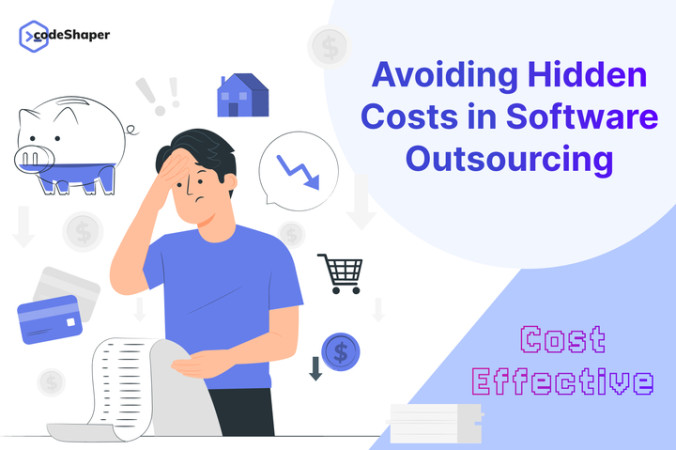
Have you ever outsourced a software project only to realize that the cost-effective option was more expensive in the end?
Outsourcing can accelerate product development, but if you don’t plan carefully, hidden costs can quietly destroy your ROI. According to Deloitte’s global outsourcing survey, over 52% of companies have experienced cost overruns during outsourcing projects.
In 2026, founders building SaaS platforms, enterprise tools, or even launching AI products must understand the true total cost of outsourcing software development. Whether you're planning to outsource development or exploring ‘How to Launch an AI MVP in 2026: Founder’s Guide’, cost transparency is critical.
The truth is:
The biggest outsourcing failures don’t happen because of bad developers.
They happen because of hidden costs that weren’t visible during the proposal stage.
This guide answers the most searched questions about avoiding hidden costs in software outsourcing, so you can budget accurately, negotiate smarter contracts, and protect your growth runway.
Why Hidden Costs Are Rising in 2026
According to industry estimates across IT services markets, Global software outsourcing is projected to exceed $700+ billion by 2026. With AI-driven development, cross-border teams, and remote-first collaboration becoming standard, complexity has increased. So, More complexity represents more cost leak points.
In 2026, hidden costs usually appear in:
- AI integration layers
- API overuse
- Cloud infrastructure scaling
- Security compliance upgrades
- Change requests from evolving product-market fit
Outsourcing is no longer just about developing a website or a product. It may require:
- SaaS architecture
- DevOps pipelines
- Security compliance (SOC 2, GDPR)
- Performance optimization
- Continuous integration
And each layer carries cost risks.
The Harvard Business Review claims companies could save 20% to 30% on expenses by outsourcing non-core business operations. Therefore, when planning a software outsourcing project and selecting the best offshoring partner, it is essential to be aware of the software's hidden costs.
Major Reasons for Outsourcing Software Development
These are the primary reasons why multinational corporations choose to outsource, especially in the software industry, to stay agile, competitive, and innovation-driven.
Gaining a competitive edge
Outsourcing allows companies to focus on core business strategy while expert development teams handle product execution, accelerating innovation and market positioning.
Improving user experience
Specialized UX/UI and product teams help build intuitive, customer-centric applications that improve engagement, retention, and conversion rates.
Faster speed and scaling to market
Dedicated offshore teams can accelerate development cycles and scale resources up or down quickly based on project demands and deadlines.
Access highly skilled professionals quickly
Outsourcing provides immediate access to global talent pools with specific technical expertise that may be costly or scarce locally.
Cost-effective offshoring
With offshoring, businesses reduce operational expenses of hiring, infrastructure, and benefits while maintaining high development standards.
Fast and scalable hiring Solution
Instead of lengthy recruitment processes, companies can deploy professionals, ready-to-work teams within weeks by outsourcing a project.
High-quality deliverables for business success
Experienced outsourcing partners follow proven development frameworks, ensuring reliable, scalable, and performance-optimized solutions.
Related: Leading Offshore Software Development Companies in Bangladesh
What Are Hidden Costs in Software Outsourcing?
Hidden costs in software outsourcing are expenses that are not clearly included in the initial proposal or contract, but emerge during development or after launch.
Companies can realize the effect during business operations. Finding these hidden costs and avoiding them is crucial for companies that plan to outsource.
Types of Hidden Costs in Software Outsourcing
They usually fall into three categories:
Direct Hidden Costs
- Change requests
- Extra development hours
- Additional features
Indirect Hidden Costs
- Communication overhead
- Internal management time
- Training and onboarding
Long-Term Hidden Costs
- Maintenance
- Infrastructure
- Security updates
- Compliance requirements
Most vendors quote only development hours.
But smart decision-makers evaluate the total cost of outsourcing software development, not just the initial invoice. This discussion helps organizations understand the potential benefits of outsourcing software projects and realize their full potential.
Why Most Outsourcing Budgets Fail
We all know that the primary reason for outsourcing software development is to reduce cost. But for some hidden reason, the development cost will overrun. It is critical to address unexpected hidden cost sources and develop solution strategies.
Outsourcing budgets fail for three primary reasons:
1. Incomplete Requirement Discovery
If your scope isn’t clearly defined, change requests are inevitable.
2. Underestimated Operational Costs
Infrastructure, tools, QA automation, and monitoring are often excluded from initial quotes.
3. Lack of Risk Buffer
Unexpected delays, rework, or team changes can increase cost by 15–30%. Understanding these risks early allows you to control them.
12 Hidden Costs in Software Outsourcing
Here’s a detailed breakdown of the most common hidden outsourcing costs and how they impact your development budget.
1. Poorly Defined Requirements
Vague requirements often cause 15–35% budget overruns due to rework, additional sprints, and refactoring. Avoid this by creating a detailed PRD, defining user stories with acceptance criteria, and running a paid discovery phase before development starts.
When requirements are not clear, you’ll pay for:
- Extra sprint cycles
- Rework
- Scope clarification workshops
- Refactoring
Example
You outsource an MVP for $40,000. After development starts, you realize:
- Admin dashboard missing
- User analytics needed
- Stripe subscription logic is incomplete
Each becomes a change request. Suddenly, you’re at a $55,000 cost overrun.
How to Avoid It
- Create a detailed Product Requirement Document (PRD)
- Use user stories with acceptance criteria
Conduct a technical discovery phase
2. Communication Gaps
Time zone differences and unclear communication can delay decisions by 24–48 hours per issue, increasing management overhead by 20–30%. Reduce friction by ensuring daily overlap hours, weekly sprint demos, and a single point of contact.
Over a 6-month project, that delay compounds into:
- Missed deadlines
- Extended sprints
- Additional management overhead
Cost Impact
Project managers spend 20–30% more time coordinating offshore teams.
How to Avoid It
- Overlap at least 2–4 working hours daily
- Weekly demo calls
- Use structured documentation in tools like Notion or Jira
- Assign one single point of contact
3. Change Requests & Clear Scope
Small feature additions outside the original contract quickly inflate costs, especially in fixed-price projects. Protect your budget with a clear change request formula, defined hourly rates, and a strict feature freeze before each sprint. Because, 37% founders experience scope creep when outsourcing a software project.
Most fixed-price contracts include:
- Limited revisions
- Clearly defined features
Anything outside of it required an extra invoice.
Protection Strategy
- Clear change request pricing formula
- Hourly rate for additional work
- Feature freeze milestone before sprint start
4. Infrastructure & Cloud Cost Escalation
While development costs are quoted upfront, operational costs on platforms like Amazon Web Services, Google Cloud, or Microsoft Azure can multiply as users scale. Always request infrastructure forecasts and long-term scaling projections.
May your SaaS require:
- Amazon Web Services
- Google Cloud
- Microsoft Azure
But scaling users can 3x–5x monthly server bills.
Hidden Areas
- API calls
- Storage expansion
- AI inference requests
- DevOps monitoring tools
Avoidance Strategy
- Infrastructure cost projection
- Monthly scaling forecast
- DevOps documentation ownership
5. Security & Compliance Costs
Compliance requirements like GDPR, HIPAA, or SOC 2 can significantly increase costs if addressed after launch. Include security standards, audits, and penetration testing in the original contract to prevent 2–4x future expenses. Depending on your industry, you may need:
- GDPR alignment
- HIPAA compliance
- SOC 2 readiness
After launch, security upgrades can cost 2 to 4x more than building securely from the beginning.
How to Avoid
- Add security requirements in the contract
- Conduct code audits before final payment
- Include penetration testing milestone
6. Vendor Lock-In
Some vendors retain control over source code, hosting accounts, or deployment credentials, making future transitions expensive. Ensure you own the Git repository, cloud account, and intellectual property from day one.
Some outsourcing companies:
- Restrict source code access
- Control cloud accounts
- Keep deployment credentials
Later, switching vendors becomes expensive.
Avoid It By
- Owning a Git repository
- Owning a hosting account
- Including an IP transfer clause
7. Knowledge Transfer Failure
Without proper documentation and training, your internal team may struggle to manage the product independently. Include structured documentation, handover sessions, and recorded walkthroughs in the project scope. After project completion, your internal team may not understand:
- Architecture
- API flows
- DevOps pipelines
Impact: You remain dependent on the vendor.
How to Fix
- Documentation deliverables
- Final walkthrough training sessions
- Recorded demo archives
8. Hidden Management Overhead
Even with low offshore rates, internal management time, product reviews, QA validation, and coordination add hidden operational costs. Factor in leadership and oversight hours when calculating the real outsourcing budget. You may need:
- Product manager
- QA reviewer
- Technical advisor
That internal cost is rarely calculated.
9. Currency Fluctuation Risk
Long-term offshore contracts paid in foreign currencies may increase costs due to exchange rate volatility. Mitigate this risk with fixed-rate agreements or built-in financial buffers.
10. Low Code Quality & Technical Debt
Cheap development without proper testing or architecture planning often leads to technical debt that can cost 40–60% of the original budget to fix. Prioritize code reviews, test coverage, and scalable architecture from the start. Cheap outsourcing may mean:
- No test coverage
- Poor architecture
- Spaghetti code
Fixing technical debt later can cost 40–60% of the original development cost.
11. AI & API Overconsumption
AI-powered features often rely on APIs from providers like OpenAI and Anthropic, where costs scale per request. Request API usage projections and token optimization strategies to prevent operational cost spikes. In 2026, AI features are common. But AI calls cost money per request.
Unoptimized integration with:
- OpenAI
- Anthropic
It can drastically increase operating expenses. So, always do:
- API usage projection
- Token optimization strategy
12. Post-Launch Maintenance Costs
Software requires ongoing updates, bug fixes, security patches, and performance optimization. Plan for 15–25% of the initial development cost annually to maintain stability and scalability.
Many founders assume that when a project is complete, it's done.
Reality:
- Bug fixes
- Feature upgrades
- Security patches
- Framework updates
Maintenance usually accounts for 15–25% of development costs annually.
Outsourcing Pricing Models & Hidden Cost Impact
Here’s a simplified breakdown of the three main outsourcing pricing models and how they affect hidden costs.
| Pricing Model | What It Means | Hidden Cost Risk | Best For |
| Fixed Price | Pre-agreed total project cost based on defined scope | High risk if scope changes or expensive change requests | MVP with stable requirements |
| Time & Material | Pay based on actual hours and resources used | Budget can expand if not closely monitored | Startups iterating toward product-market fit |
| Dedicated Team | Monthly cost for a committed development team | Requires internal management and strategic oversight | Scaling SaaS companies needing long-term growth |
Fixed price protects short-term predictability, Time & Material supports flexibility, and Dedicated Teams optimize long-term scalability. But each pricing model carries different hidden cost exposure depending on how well you manage scope and communication.
Related: Minimal Viable Product (MVP) in Software Development: A Step-by-Step Guide
How to Avoid Hidden Costs in Software Outsourcing
Follow the 7-step framework for reducing the hidden cost in software outsourcing:
Step 1: Conduct a Detailed Discovery Phase
Define the scope before coding. Choosing an outsourcing software development partner, reviewing your requirements, and creating a plan based on them. Also, clearly understand what you want to achieve in your software development project, including its business objectives, timeline, and budgets.
Step 2: Create a Clear SRS Document
Reduce ambiguity. Before choosing an outsourcing software development partner, review your requirements and create a plan based on them. Also, clearly understand what you want to achieve in your software development project, including its business objectives, timeline, and budgets.
Step 3: Choose the Right Pricing Model
Outsourcing has various pricing models, including fixed, time and materials, and dedicated team pricing models. Each model has advantages and disadvantages, so you must determine which is best suited to your software project. Choosing the right pricing model is critical for cost control in outsourcing.
Step 4: Implement Change Control Processes
Every feature change must be costly. Align with project flexibility. To avoid the hidden costs of outsourcing software projects, companies must understand their current costs and different outsourcing pricing models that completely meet their needs.
Step 5: Add Maintenance & SLA Clauses
Avoid post-launch surprises. Once you've established your requirements with vendors, you can look for an outsourcing partner who meets your business needs. Look for a partner with industry experience and a proven track record of delivering high-quality software solutions and add after-launch maintenance services.
Step 6: Plan an Exit Strategy
Ensure documentation and IP ownership clarity. Once you've established your requirements with vendors, you can look for an outsourcing partner who meets your business needs with a clear exit strategy. Look for a partner with industry experience and a proven track record of delivering high-quality software solutions.
Step 7: Add a 15–20% Contingency Buffer
Smart businesses expect uncertainty. Outsourcing can be a cost-effective strategy. But we need to carefully analyze those seven strategies for avoiding outsourcing hidden costs and saving money, which can then be used to fund potential outsourcing benefits.
Tools and Resources to Minimize Cost Risks
- Collaboration tools (Slack, Trello, etc.).
- Project management software (Jira, Asana, etc.).
- Time-tracking and monitoring tools (AnyDesk, HiveDesk, Insightful, etc.)
Cost-Control Framework for SaaS Founders
Based on real-world SaaS outsourcing experience, here’s a proven step framework to control costs:
1: Paid Discovery Phase
Invest 5–10% of the project cost upfront to reduce risk 30% later.
2: Feature Prioritization (MoSCoW Model)
Break down requirements into four clear categories to prevent scope creep:
- Must-have – Core features required for launch
- Should-have – Important but not launch-critical
- Could-have – Nice-to-have enhancements
- Won’t-have – Future roadmap items
This strategic clarity protects your MVP budget.
3: Milestone-Based Payment Structure
Align payments with development progress instead of paying large lump sums. Likes:
- 30% upfront (project kickoff)
- 40% after mid-sprint milestone
- 30% upon final delivery and validation
This reduces financial risk and ensures accountability.
4: Weekly Demo Validation
To prevent post-launch surprises, you can follow bi-weekly validation.
5: Third-Party Code Audit Before Final Payment
6: Infrastructure Cost Forecast
7: Post-Launch Retainer Planning
Can Cost Reduction Efforts Negatively Impact Software Quality?
Software quality directly impacts customer retention, system stability, and brand trust. Studies show that poor software quality can cost businesses 15–25% of annual revenue due to rework, downtime, and customer churn.
When Cost-Cutting Hurts Quality
Problems arise when companies focus on short-term savings instead of long-term value. Common mistakes include:
- Skipping testing and QA to reduce timelines
- Using outdated or cheap tech stacks
- Underestimating budgets for scalability and security
These shortcuts often lead to higher bug rates, performance issues, and expensive post-launch fixes.
When Cost Reduction Ensures Better Quality
Modern engineering practices prove that lower cost doesn’t have to mean lower quality:
- Agile development enables early feedback and faster issue resolution
- CI/CD pipelines catch bugs earlier, reducing rework costs by up to 30–40%
- Open-source tools and code reuse cut licensing and development expenses
According to the Standish Group, Agile projects are 28% more successful and cost-effective than traditional waterfall approaches. Strategic cost optimization improves quality. Blind cost-cutting destroys it. The key is investing in the right processes, not just reducing the budget.
Should You Outsource or Build In-House Software Team?
Understanding when to outsource an entire project or hire a dedicated team is crucial for your business success. explore the list before you make decisions.
Outsourcing works best when:
- You need fast MVP validation
- You lack internal expertise
- You want cost flexibility
In-house works best when:
- You need long-term product iteration
- IP sensitivity is high
- Budget predictability is critical
Often, a hybrid model performs best.
Conclusion
Software outsourcing is not inherently risky, but poor planning is.
The companies that succeed with outsourcing:
- Define the scope clearly
- Budget realistically
- Plan long-term maintenance
- Choose experienced development partners
If you approach outsourcing strategically, it can accelerate growth without financial surprises.
With the right approach, outsourcing becomes a powerful tool to scale a business, stay competitive, and achieve long-term Growth.
Stay competitive and innovative. Partner with Codeshaper for your tech team's needs.
FAQ
Q: What is the hidden cost in outsourcing?
A: Hidden costs in software outsourcing include scope creep, infrastructure scaling, change requests, communication delays, security compliance upgrades, and post-launch maintenance expenses not included in the original contract.
Q: How much extra should I budget to avoid outsourcing cost overruns?
A: You should budget an additional 15–30% beyond the initial outsourcing quote to cover unexpected expenses.
Q: Are offshore projects riskier?
A: Offshore outsourcing is not inherently riskier, but it can introduce indirect costs such as communication delays, cultural misalignment, and time zone coordination challenges.
Q: Which pricing model has the least hidden cost risk?
A: Milestone-based or hybrid pricing models generally reduce hidden cost risks. Fixed-price contracts often lead to expensive change requests, while time-and-material models can impact in budget unpredictability
Q: How do I calculate the total outsourcing cost?
A: Use the TCO framework provided above. To calculate the true total cost, use this formula:
Total Cost of Ownership (TCO) = Development Cost
- Annual Maintenance × 3 Years
- Infrastructure & Hosting cost
- Third-Party Tools & APIs cost
- Internal Management Cost
- 15–20% Risk Buffer